Pattia Font Evaluation: A Festive Display Option for Holiday Design
Selecting the right typeface is a critical decision in graphic design, particularly when working within specific thematic constraints such as holiday marketing or seasonal crafting. For designers seeking a typeface that captures the essence of celebration without sacrificing readability or ease of use, Pattia presents a compelling case. As a joyful and festive display font, Pattia is engineered to bring warmth and cheer to visual projects. This evaluation explores its technical specifications, aesthetic qualities, and practical applications to help designers determine if it aligns with their current project requirements.
Understanding Pattia: Core Characteristics
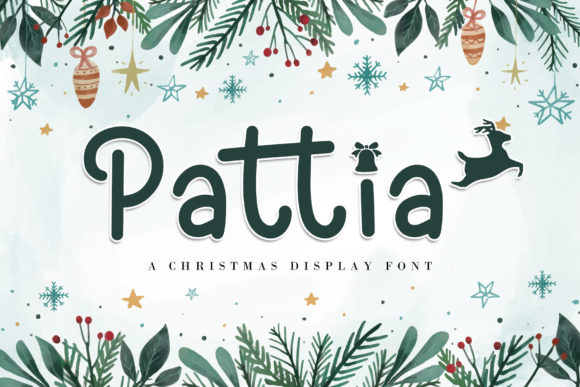
Pattia is categorized primarily as a display font, meaning it is designed to be used at larger sizes where its decorative details can be fully appreciated. The font’s character is defined by its joyful and festive nature. It evokes the spirit of Christmas holidays through its playful curves, varied stroke weights, and whimsical detailing. Unlike utilitarian sans-serif fonts designed for dense body text, Pattia is intended to serve as a headline or focal point in a composition.
The font is explicitly marketed toward Christmas holiday-themed greeting cards, party invitations, and promotional materials. However, its versatility extends beyond strict holiday usage. Its festive aesthetic can be adapted for other celebratory contexts, including birthday parties, summer festivals, or any event requiring a lighthearted and inviting tone. The key to using Pattia effectively lies in understanding its role as an accent rather than a primary reading font.
Technical Accessibility and Glyph Management
One of the most significant advantages of Pattia from a workflow perspective is its encoding method. The font is PUA encoded. To understand why this matters, it is helpful to look at how standard fonts operate versus PUA-encoded fonts.
In standard Unicode fonts, each character is assigned a specific code point (e.g., 'A' is always U+0041). While this ensures consistency across platforms, it often limits the number of available glyphs, especially for decorative elements like swashes, ligatures, and alternate characters. Designers frequently struggle to find these special characters because they are not mapped to intuitive keys on a keyboard.
PUA, or Private Use Area, encoding assigns these extra glyphs to unused slots in the Unicode block. While this requires a slightly different approach to inputting text, it offers distinct benefits:
- Complete Access: Users can access all available glyphs, including intricate swashes and festive ornaments, without needing third-party substitution tools.
- Consistency: Once the correct input method is established, the glyphs remain stable across different software environments.
- Ease of Use: With proper setup, accessing these decorative elements becomes straightforward, allowing designers to quickly embellish their layouts.
For designers who prioritize having a wide array of decorative options readily available, PUA encoding removes a common barrier to entry. It ensures that the full personality of the font is accessible, provided the user takes the time to learn the specific input mappings or uses the provided glyph panel.
Practical Applications and Ideal Use Cases
Pattia shines in scenarios where visual impact takes precedence over long-form readability. Below are specific situations where Pattia is a strong fit:
Holiday Greeting Cards
The primary strength of Pattia is its ability to convey seasonal cheer. On a greeting card, the font’s festive swashes and playful forms can immediately set the tone. When paired with appropriate imagery—such as holly, snowflakes, or warm color palettes—Pattia enhances the emotional resonance of the message. It is ideal for the recipient’s name, the word "Christmas," or short holiday wishes.
Crafting Projects
For physical crafting, such as cutting vinyl for mugs, creating paper cutouts, or designing labels, Pattia offers high legibility and charm. The clear distinction between characters ensures that even when scaled down for small tags or stickers, the text remains readable. The decorative elements add value to handmade items, giving them a professional yet personal touch.
Social Media Graphics
In the fast-paced environment of social media, bold and expressive typography grabs attention. Pattia works well for Instagram stories, Facebook posts, or Pinterest pins where the goal is to announce an event, share a quote, or promote a sale. Its festive nature makes it particularly effective during Q4 marketing campaigns.
Tradeoffs and Considerations
While Pattia has distinct strengths, it is not a universal solution. Designers must consider several tradeoffs before integrating it into their workflow.
Readability Limitations
As a display font, Pattia is not suitable for body copy. Attempting to set paragraphs of text in Pattia will result in poor readability and viewer fatigue. It should be reserved for headlines, titles, and short phrases. If a project requires extensive text, Pattia should be paired with a neutral, highly readable serif or sans-serif font to balance the composition.
Input Complexity
PUA encoding, while beneficial for glyph availability, can be a hurdle for beginners. Unlike standard fonts where typing "Hello" produces "Hello," PUA fonts may require selecting characters from a glyph sheet or using specific keystrokes to access swashes. Designers must be willing to invest time in learning the font’s input system or rely on the software’s built-in glyph panel. This can slow down the initial design process compared to more conventional fonts.
Niche Appeal
Pattia’s strong festive identity means it may feel out of place in minimalist, corporate, or modern designs. If the brand voice is serious or understated, Pattia’s exuberance might clash with the desired aesthetic. It is best suited for brands and projects that embrace warmth, tradition, and playfulness.
Comparative Analysis: When to Choose Alternatives
Evaluating Pattia involves comparing it to other festive display fonts. Here is how it stacks up against common alternatives:
Vs. Traditional Serif Display Fonts: Fonts like Bodoni or Garamond offer elegance but lack the whimsy of Pattia. If the goal is sophistication rather than joy, a traditional serif is a better choice. Pattia is superior for projects aiming for a fun, approachable vibe.
Vs. Handwritten Scripts: Many festive fonts mimic handwriting. While scripts offer a personal touch, they can be difficult to read at smaller sizes. Pattia provides a middle ground: it is decorative like a script but maintains the structural clarity of a display font. This makes it more versatile for longer headlines.
Vs. Standard Unicode Decorative Fonts: Some competitors offer similar aesthetics but use standard Unicode encoding. These may be easier to type but often have fewer swashes or alternates. If access to a comprehensive set of decorative glyphs is a priority, Pattia’s PUA encoding provides greater creative freedom.
Decision-Making Insights for Designers
To determine if Pattia is the right tool for your project, consider the following questions:
- What is the primary message? If the message is short, celebratory, and seasonal, Pattia is likely a strong candidate.
- Who is the audience? Does the target audience respond well to playful and warm design elements? If so, Pattia will resonate.
- What is the medium? Is the design being viewed on screen at large sizes, or printed on physical crafts? Pattia performs well in both contexts, provided it is not used for dense text.
- Are you comfortable with PUA encoding? If you prefer a plug-and-play experience without learning new input methods, you might prefer a standard Unicode font. However, if you want maximum decorative control, Pattia’s encoding is a benefit.
In conclusion, Pattia is a specialized tool designed to inject joy and festivity into design projects. Its PUA encoding ensures that designers have access to a rich library of glyphs and swashes, enhancing the creative potential of the typeface. While it is not suitable for body text or serious corporate communications, it excels in holiday greetings, crafting, and celebratory graphics. By weighing its festive appeal against its technical requirements, designers can make an informed decision about whether Pattia fits their specific needs.